



Meniscus Tear Treatment in Dubai: Repair, Root Repair and Knee Cartilage Preservation
Specialist assessment and treatment for meniscus tears, meniscus repair, meniscal root repair, ramp lesions, partial meniscectomy, cartilage damage, and knee preservation in Dubai.
If your knee locks, catches, swells after sport, or hurts with twisting movements, the cause may be a meniscus tear, sometimes combined with cartilage damage. The right treatment is not always “remove the meniscus.”
For many patients, meniscus and cartilage treatment Dubai should focus on preserving as much healthy tissue as possible, protecting knee mechanics, and choosing surgery only when it is truly indicated.
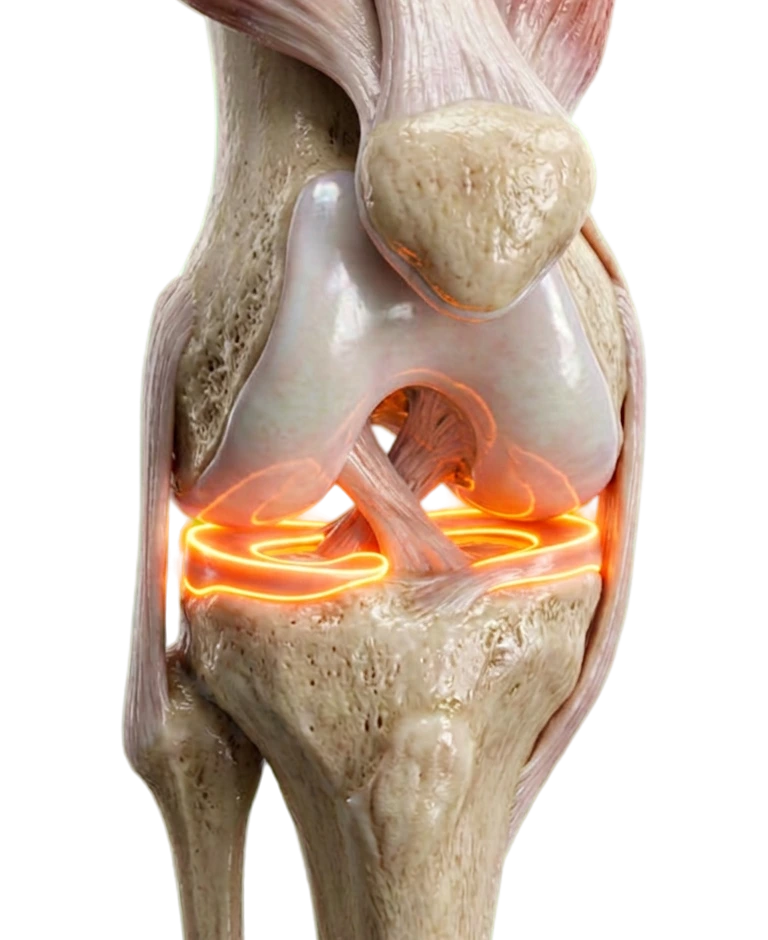
Meniscus preservation matters
The meniscus helps absorb shock and distribute load across the knee. Preserving it when possible can help protect long-term knee function.
Patients who need meniscus or cartilage assessment
This service is for patients with knee locking, catching, swelling, twisting pain, MRI-confirmed meniscus tear, cartilage damage, or uncertainty about whether repair, trimming, or rehabilitation is the right next step.
Sports or twisting injury
Knee pain after sport, gym, running, pivoting, squatting, or a sudden twisting movement.
Locking or catching
Mechanical symptoms such as the knee feeling stuck, jammed, unstable, or not moving smoothly.
MRI second opinion
Patients told they have a meniscus tear who want to know if it can be repaired or treated without surgery.
Cartilage damage
Meniscus tears combined with cartilage defects, osteochondral lesions, or early overload symptoms.
Persistent swelling
Swelling after activity, pain with deep bending, or recurring symptoms despite rest and physiotherapy.
Preservation-focused plan
Patients who want the most appropriate plan: repair when possible, trim only when necessary.
Common meniscus tear symptoms
A meniscus tear often feels different from simple muscle soreness. Some patients feel sharp joint-line pain, while others mainly notice swelling, catching, or the knee not moving normally.
- Knee locking or catching
- Clicking or popping during movement
- Swelling after injury or swelling that returns with activity
- Pain with twisting, pivoting, or deep bending
- Pain going down stairs or standing from a low seat
- A sense that the knee is not moving smoothly
Why meniscus preservation is important
The meniscus acts as a shock absorber and helps distribute load across the knee. Removing large parts of the meniscus can increase contact stress on the cartilage.
In the right patient and tear pattern, repairing and preserving meniscus tissue may reduce future joint overload and support better long-term knee mechanics.
That is why a meniscus and cartilage treatment Dubai plan should be based on tear type, tissue quality, cartilage condition, knee stability, alignment, activity level, and patient goals.
Meniscus and cartilage conditions we treat
The goal is not to use one treatment for every tear. The goal is to match the diagnosis, symptoms, tear pattern, cartilage status, and patient goals with the most appropriate plan.
Meniscus Repair
When the tear pattern, location, stability, and tissue quality allow it, meniscus repair may be considered to preserve function.
Partial Meniscectomy
When tissue cannot be repaired safely, selective trimming may remove only unstable fragments while preserving as much healthy meniscus as possible.
Meniscal Root Repair
A root tear can behave like functional meniscus loss because it disrupts anchoring. Root repair aims to restore meniscus function when indicated.
Ramp Lesions
Ramp lesions are posterior meniscus tear patterns often linked with certain ACL and knee instability patterns. They should be identified and treated appropriately.
Combined Meniscus and Cartilage Preservation
In some patients, meniscus tears coexist with cartilage problems. The plan may address both depending on defect size, location, symptoms, and biomechanics.
Osteochondral Defects
Osteochondral defects involve cartilage and underlying bone. Management depends on size, depth, symptoms, and activity goals.
How we evaluate your knee
A good plan starts with the right diagnosis. MRI is useful, but the MRI report alone is not enough. Image review and clinical correlation matter.
Detailed history
We review injury mechanism, sport, symptoms, swelling pattern, locking, catching, previous treatment, and what you want to return to.
Physical examination
The knee is examined for joint-line pain, mechanical signs, swelling, movement, stability, and functional limitations.
MRI and imaging review
MRI can help assess meniscus tear type, root tears, cartilage status, bone changes, and associated injuries. X-rays may be used for alignment or joint space evaluation.
Clear treatment plan
You receive a practical plan explaining rehabilitation, injection options, arthroscopy if needed, repair versus trimming, and realistic recovery expectations.
What happens next after diagnosis?
Treatment is tailored. Many patients start with swelling control, pain management, restoring motion, targeted physiotherapy, and activity modification for a defined period.
Non-surgical treatment when appropriate
Not every meniscus tear needs surgery. Conservative care may be appropriate depending on symptoms, tear pattern, knee condition, and patient goals.
- Swelling and pain control
- Restoring knee movement
- Physiotherapy and strengthening
- Activity modification
- Monitoring symptoms and function
Arthroscopy-based treatment when indicated
Arthroscopy may be discussed when there is persistent locking, catching, unstable tears, significant mechanical symptoms, or tear patterns unlikely to settle with rehabilitation.
- Confirm tear pattern
- Repair when the tear is repairable
- Trim only unstable tissue when necessary
- Address cartilage issues when clinically indicated
- Plan rehabilitation based on the procedure
Have an MRI already?
If you already have an MRI, Dr. Tomislav can review the images, match them with your symptoms and examination, and explain whether repair, trimming, rehabilitation, or another option is most appropriate.
Recovery and return to activity
Recovery depends on what is done. A simple trimming procedure may have a different recovery profile than a meniscus repair or root repair.
Repair and root repair often require more protection early because healing needs time. When cartilage work is added, rehabilitation is planned accordingly.
The most important point is that return to sport should be based on function and strength criteria, not only the calendar.
Return-to-activity principles
- Control swelling and pain
- Restore safe knee motion
- Rebuild quadriceps, hamstring, hip and glute strength
- Progress loading based on symptoms and procedure type
- Return to sport only when strength and function are ready
Clear diagnosis, preservation mindset and structured recovery
Patients typically value a clear diagnosis explained in simple language, a preservation-focused approach, structured recovery guidance, and optional second opinion or MRI review.
If you have knee locking, swelling after sport, or MRI-confirmed meniscus tear, Dr. Tomislav can help clarify the most appropriate plan: repair, trimming, rehabilitation, cartilage preservation, or combined treatment.
Patients usually need help with:
- Understanding if the meniscus tear explains the symptoms
- Knowing whether the tear can be repaired
- Choosing repair vs partial meniscectomy vs rehabilitation
- Reviewing MRI findings before surgery
- Planning recovery and safe return to sport
Meniscus and cartilage treatment questions
What are common signs of a meniscus tear?
Common signs include knee locking or catching, joint-line pain, swelling after activity, pain with twisting, and difficulty with deep bending. MRI plus examination helps confirm the diagnosis.
Does every meniscus tear need surgery?
No. Some tears can be treated with rehabilitation, swelling control, strengthening, and activity modification. Surgery may be considered for unstable tears, true locking, persistent mechanical symptoms, or repairable tear patterns.
Is meniscus repair better than trimming?
Meniscus repair preserves tissue and may be better for long-term knee protection when the tear is repairable. Trimming may be appropriate when the damaged part is unstable and cannot be repaired safely.
What is a meniscal root tear?
A meniscal root tear affects the anchoring point of the meniscus. It can behave like functional meniscus loss and may increase joint overload. Root repair may be considered when indicated.
What if I have both meniscus and cartilage damage?
The treatment plan should consider both problems together. Management depends on tear pattern, cartilage defect size and location, symptoms, alignment, knee stability, and activity goals.
Can Dr. Tomislav review my MRI?
Yes. MRI review is useful, but the report alone is not enough. The MRI should be matched with your symptoms, examination, and functional goals.
Book a meniscus and cartilage assessment in Dubai
If you have knee locking, catching, swelling after sport, twisting pain, cartilage damage, or MRI-confirmed meniscus tear, you can book an assessment with Dr. Tomislav at Tadawi Hospital, Al Garhoud, Dubai.