



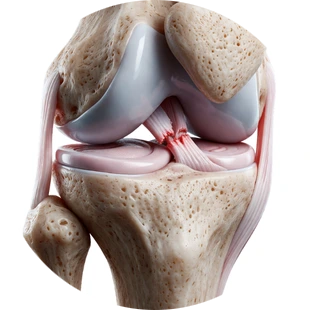
ACL and Ligament Injuries Dubai: Specialist Knee Treatment
Specialist assessment and treatment for ACL tears, revision ACL, LET / Modified Lemaire, PCL, LCL, posterolateral corner injuries, and complex multi-ligament knee instability in Dubai.
If your knee gives way, feels unstable, swells after injury, or you cannot return to sport after a twist or pivot injury, the problem may be a knee ligament injury. Some cases involve only the ACL. Others involve multiple ligaments and need a more detailed plan to restore stability and protect the meniscus and cartilage long term.
ACL and ligament injuries Dubai patients commonly need more than a simple MRI report. The safest plan comes from combining the injury story, physical examination, MRI findings, knee stability, sport goals, and associated meniscus or cartilage injuries.
ACL and Ligament Injuries We Assess in Dubai
Knee ligament injuries are not all the same. The treatment decision depends on which ligament is injured, whether the knee is functionally unstable, whether meniscus or cartilage damage is present, and what the patient wants to return to.
For ACL and ligament injuries Dubai cases, the key question is not only whether the ACL is torn. The key question is whether the knee is stable enough for daily life, gym training, running, pivoting, and return to sport.
Primary ACL Reconstruction
When the ACL is torn and the knee remains unstable, ACL reconstruction may be recommended to restore stability, especially for active patients, athletes, and people returning to pivoting sports.
Rotational Stabilization: LET / Modified Lemaire
In selected high-demand patients or patients with significant rotational instability, lateral extra-articular tenodesis may help reduce pivot shift and protect the ACL reconstruction.
Revision ACL Reconstruction
If a previous ACL reconstruction has failed because of re-injury, graft failure, tunnel issues, or untreated rotational instability, revision ACL needs careful planning.
PCL Injury
PCL injuries may occur after direct trauma, falls, dashboard-type injuries, or sports trauma. Treatment depends on injury grade, instability, associated injuries, and functional symptoms.
LCL and Posterolateral Corner Injury
LCL and posterolateral corner injuries can be missed if the knee is not examined carefully. Untreated PLC instability may affect ACL reconstruction success and long-term stability.
Multi-ligament Knee Injury
Complex injuries involving more than one ligament need a structured plan. The goal is to restore stability, protect the joint, and guide the patient through a realistic recovery pathway.
Not every ACL or ligament injury needs surgery
The decision is not based only on the MRI. It depends on the patient, the physical examination, the instability pattern, associated injuries, and the activity goal.
Some patients can do well with structured rehabilitation, bracing, strength training, neuromuscular control, and activity modification. Others continue to experience giving way, repeated instability, or inability to return to sport.
In those cases, surgery may be considered to reduce repeated injury risk and protect the meniscus and cartilage.
The key decision factors
- Knee stability on physical examination
- Activity level and sport demands
- Associated meniscus, cartilage, or other ligament injuries
- Symptoms over time and response to rehabilitation
- Patient goals: daily life, gym, work, or competitive sport
Assessment for ACL and Ligament Injuries Dubai
The goal is to give you a clear answer quickly: which ligaments are injured, whether the knee is stable or unstable, and whether meniscus or cartilage injuries are also present.
A focused assessment for ACL and ligament injuries Dubai helps avoid two common mistakes: ignoring instability that needs treatment, or rushing into surgery when structured rehabilitation may still be appropriate.
Detailed injury history
We review how the injury happened, whether there was a pop, how quickly the knee swelled, what movements cause giving way, and what sport or activity you need to return to.
Physical examination for stability
The knee is examined for ACL, PCL, MCL, LCL, posterolateral corner stability, rotational control, swelling, range of motion, and functional movement.
MRI and imaging review
MRI is useful for confirming ligament injuries and checking for meniscus, cartilage, bone bruise, or associated damage. X-rays may be added for alignment, bone injury, or arthritis screening.
Clear treatment plan
You receive a practical plan: rehabilitation, bracing, follow-up, surgical options when indicated, recovery expectations, and return-to-sport milestones.
What your assessment usually includes
The assessment is designed to connect your symptoms with your examination and imaging findings. This is important because MRI findings alone do not always explain knee instability or return-to-sport difficulty.
- Which ligaments are injured: ACL alone or multiple ligaments
- Whether the knee is stable or functionally unstable
- Whether meniscus or cartilage injuries are present
- Detailed movement pattern and instability symptoms
- Physical examination tests for ligament stability
- MRI review and X-rays when needed
Treatment for ACL and Ligament Injuries Dubai
Treatment is customized. A primary ACL tear, revision ACL case, LET / Modified Lemaire case, PCL injury, LCL injury, or multi-ligament injury may require a different plan.
A treatment plan for ACL and ligament injuries Dubai should be based on the patient’s instability, MRI findings, sport demands, age, tissue quality, meniscus status, cartilage condition, and long-term knee protection.
Non-surgical rehabilitation plan
When appropriate, the first goal is to reduce swelling and pain, restore range of motion, rebuild strength, and improve neuromuscular control.
- Swelling and pain control
- Range of motion restoration
- Quadriceps, hamstring, hip and glute strengthening
- Balance and control training
- Criteria-based return to activity
Surgical plan when indicated
Surgery may be considered when instability persists, high-demand sport requires stable pivoting, associated injuries need treatment, or the knee is functionally unsafe.
- Primary ACL reconstruction
- Revision ACL reconstruction
- LET / Modified Lemaire when appropriate
- PCL, LCL, PLC or multi-ligament reconstruction
- Meniscus and cartilage treatment when needed
Need a clear answer after a knee injury?
If your knee feels unstable after sport, twisting, landing, or a previous ACL surgery, a focused assessment can clarify whether rehabilitation, further imaging, or surgery is the safest next step.
Recovery and return to sport after ACL or ligament injury
Return to sport should not be only time-based. It should be based on swelling control, strength, movement quality, confidence, sport-specific testing, and surgeon / physiotherapy clearance.
Early phase
Swelling control, safe range of motion, walking quality, pain control, and early muscle activation.
Strength phase
Rebuilding quadriceps, hamstrings, hip strength, balance, landing control, and movement confidence.
Sport phase
Running, cutting, agility, deceleration, pivoting, return-to-play testing, and gradual sport-specific exposure.
Why patients choose specialist ACL and ligament care in Dubai
Patients commonly seek care because they want a clear diagnosis, a realistic plan, safe return to sport, and a second opinion on MRI findings or surgery recommendations.
If you are searching for ACL and ligament injuries Dubai, the goal should be more than simply confirming a torn ligament. The goal is to understand how stable the knee is and what treatment gives the safest long-term outcome.
Patients usually need help with:
- A clear answer: “Is it ACL, meniscus, or both?”
- A realistic plan: rehabilitation vs surgery
- A safe pathway back to sport
- Structured planning for revision ACL and complex injuries
- MRI review and orthopedic second opinion in Dubai
ACL and Ligament Injuries Dubai: Patient Questions
How do I know if my ACL is torn?
Common signs include a pop during injury, swelling within hours, and ongoing instability, especially with turning, pivoting, landing, or changing direction. A proper examination and MRI review help confirm the diagnosis.
Can an ACL heal on its own?
ACL tears generally do not heal back to normal function in the same way many patients expect. Some people can cope with rehabilitation, but persistent giving way or pivoting instability is a key reason surgery may be recommended.
When should I get an MRI after knee injury?
MRI is often helpful when there is instability, swelling, suspected meniscus injury, locking, or symptoms that persist despite initial care. MRI should be interpreted together with examination findings.
How long does ACL recovery take?
Recovery varies by procedure, associated injuries, sport demands, and rehabilitation quality. Return to sport should be based on strength, movement quality, confidence, and functional testing, not just time.
What is revision ACL reconstruction?
Revision ACL is surgery after a previous ACL reconstruction has failed. It requires careful assessment of graft failure, tunnel position, alignment, rotational instability, meniscus status, and sometimes staged planning.
What is LET or Modified Lemaire?
LET, or lateral extra-articular tenodesis, is an additional rotational stabilization procedure used in selected patients. It may be considered in high-risk athletes, revision ACL cases, or significant pivot-shift instability.
Book an ACL and Ligament Injuries Dubai Assessment
If you have knee instability, swelling after injury, sports trauma, a suspected ACL tear, or you need a second opinion on MRI or surgery, the fastest way forward is a focused orthopedic assessment.
If you are searching for ACL and ligament injuries Dubai, Dr. Tomislav can review your symptoms, MRI, knee stability, sport demands, and treatment options in one clear consultation.