





Achilles tendon guide · Dubai
Achilles Tendon Rupture vs Tendinopathy: How to Tell the Difference and When to Seek Assessment
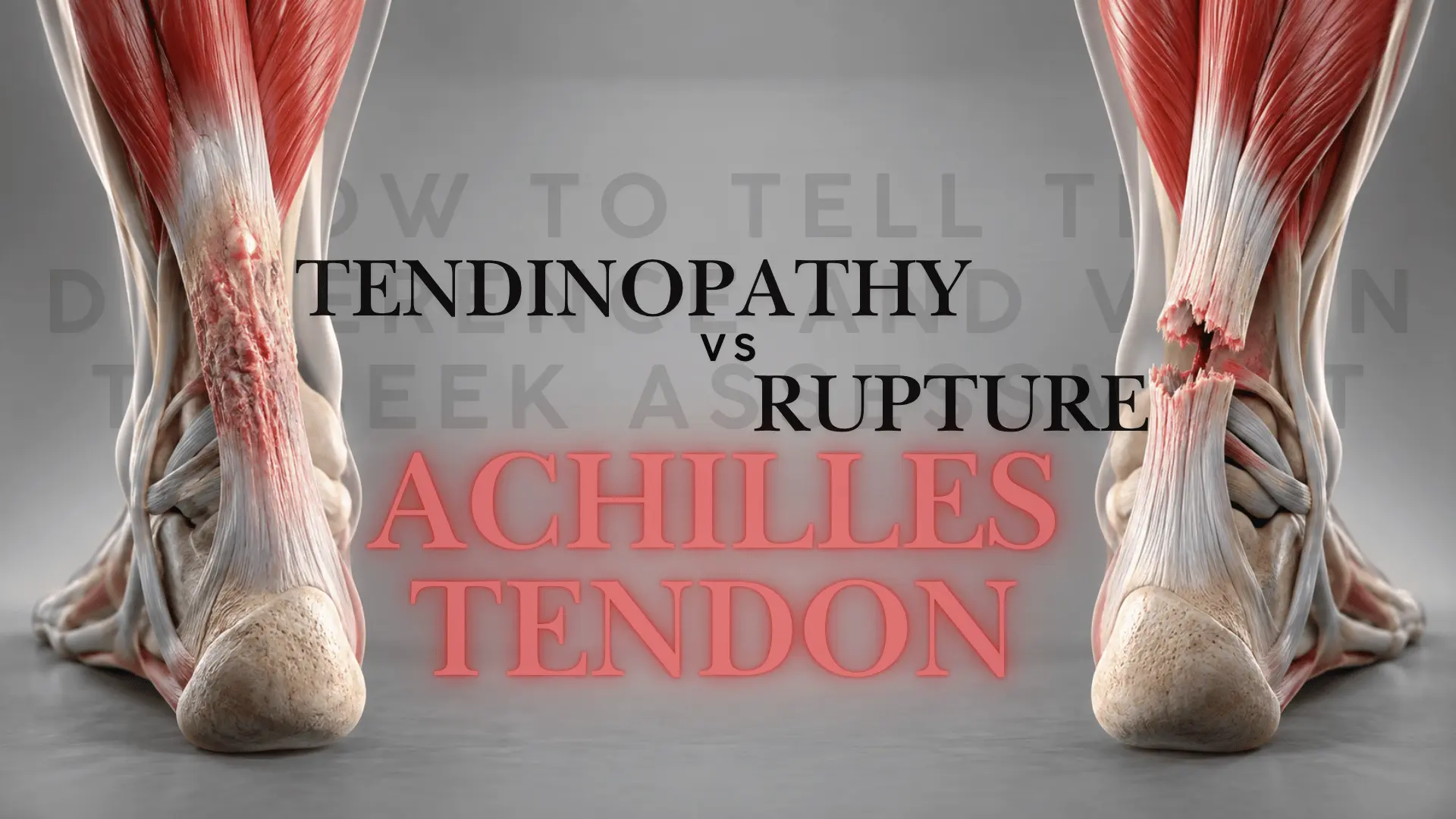
Achilles tendon pain does not always mean the same injury. A gradually painful, stiff tendon and a sudden rupture can affect the same structure, but the urgency, treatment and rehabilitation can be very different.
01 · The direct answer
Achilles rupture and Achilles tendinopathy usually behave very differently
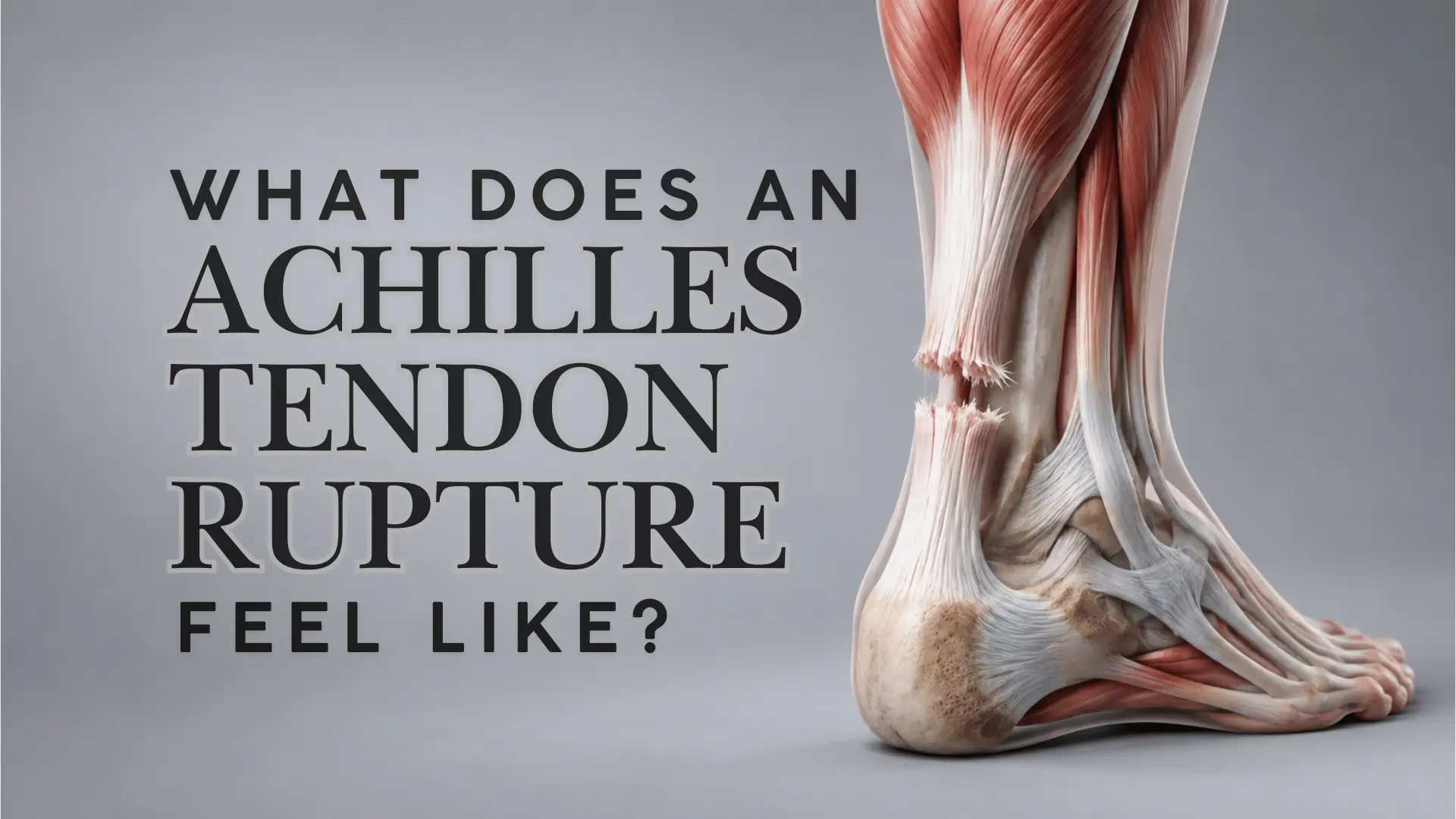
An Achilles tendon rupture usually occurs suddenly. Patients may describe a snap, kick or pop behind the ankle, followed by weakness when pushing off the foot.
Achilles tendinopathy, by contrast, more commonly develops gradually as the tendon becomes painful and less tolerant of repeated loading.
The distinction matters because a suspected acute rupture deserves prompt clinical assessment, whereas most cases of Achilles tendinopathy are initially managed with a structured rehabilitation and tendon-loading program.
| Feature | Achilles tendon rupture | Achilles tendinopathy |
|---|---|---|
| Typical onset | Sudden | Gradual |
| Common description | Pop, snap or feeling of being kicked | Stiffness or load-related pain |
| Push-off strength | Often clearly reduced | Usually preserved but may be painful |
| Walking | May still be possible | Usually possible |
| Morning stiffness | Not the main feature | Common |
| Swelling / bruising | Can develop after injury | Usually less dramatic |
| Urgency | Prompt assessment recommended | Assessment if persistent or limiting activity |
| Surgery | Considered in selected ruptures | Rarely first-line |
| Rehabilitation | Essential | Main treatment in most cases |
Partial tears, chronic ruptures, insertional tendon disorders and other calf injuries can overlap in their symptoms. Pain location alone is not enough for a reliable diagnosis.
02 · Why the tendon matters
What is the Achilles tendon?
The Achilles tendon connects the calf muscles to the heel bone and transfers force from the calf into the foot.
It plays an important role when you walk, run, accelerate, jump, change direction, climb stairs and rise onto your toes. This is why Achilles problems can have a major effect on both athletes and everyday activities.
Force transfer
The tendon transfers calf-muscle force to the heel so the foot can push against the ground.
Sport demand
Sprinting, jumping and rapid direction change place high loads through the Achilles.
Clinical difference
A painful tendon may still be continuous. A rupture has lost some or all tendon continuity.
That difference changes the clinical decision.
03 · Acute injury pattern
What does an Achilles tendon rupture feel like?
A classic acute Achilles rupture often occurs during a powerful push-off or sudden change in direction.
Patients frequently describe:
- a sudden pop or snap;
- the sensation that someone kicked them from behind;
- sharp pain in the lower calf or back of the ankle;
- immediate weakness;
- difficulty pushing the foot into the ground;
- difficulty standing on the injured leg's toes;
- swelling or bruising.
One important point is that pain can decrease after the initial injury. Less pain does not necessarily mean that the tendon is intact.
Patient question
Can you still walk with a ruptured Achilles tendon?
Yes. Some people remain able to walk after a complete rupture because other muscles around the ankle can still produce plantar-flexion movement.
However, walking usually feels abnormal and push-off strength may be substantially reduced.
Being able to walk does not safely rule out an Achilles tendon rupture.
If there was a sudden pop followed by weakness, difficulty pushing off or a significant change in walking, the tendon should be properly assessed.
04 · Gradual load-related pain
What is Achilles tendinopathy?
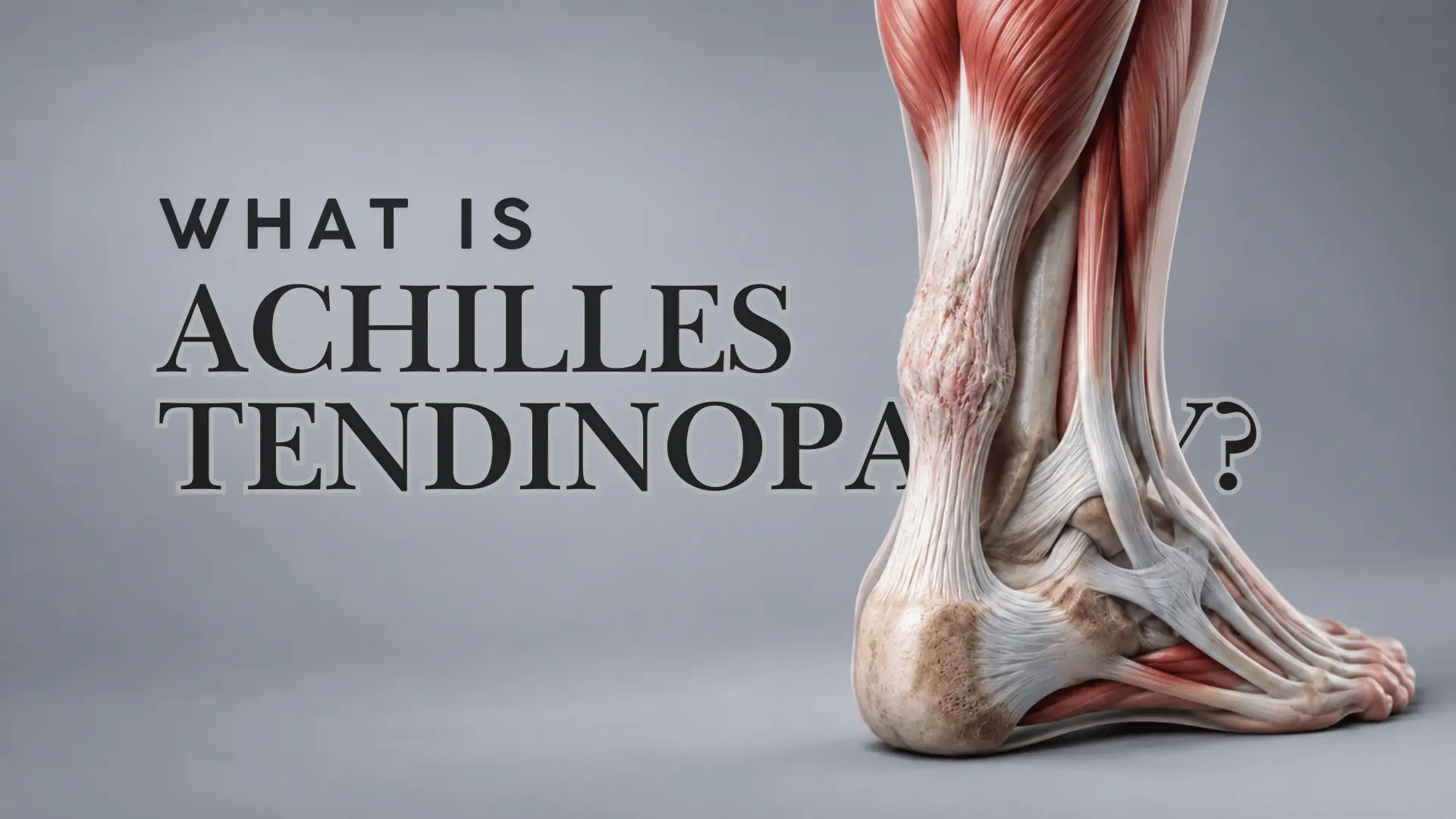
Achilles tendinopathy is usually a load-related tendon disorder rather than a sudden complete structural failure.
It commonly affects people who run, jump or participate in sports requiring repeated acceleration. Symptoms often develop gradually rather than during one obvious traumatic event.
Typical complaints include:
- Achilles pain during or after running;
- stiffness when first getting out of bed;
- pain during the first few minutes of exercise;
- pain after increasing training volume;
- reduced tolerance for sprinting or jumping;
- tenderness or thickening of the tendon.
Midportion Achilles tendinopathy commonly involves the tendon several centimetres above the heel attachment, while insertional Achilles tendinopathy affects the area where the tendon attaches to the heel bone. These are related but not identical conditions, and rehabilitation may need to be modified accordingly.
The 2024 clinical practice guideline for midportion Achilles tendinopathy recommends progressive tendon-loading exercise as first-line treatment and advises against complete rest as the main strategy. Imaging is not routinely required when the clinical picture is clear, although it can be useful when the diagnosis is uncertain, progress is unexpectedly poor, or another problem such as a partial tear is suspected.
2024 midportion Achilles tendinopathy clinical practice guideline ↗
Patients sometimes assume that a painful tendon will inevitably snap. That is too simplistic. A painful tendon should still be taken seriously, especially if training capacity continues to decline, but the usual response is accurate diagnosis and progressive load management—not fear or complete avoidance of activity.
The goal is to rebuild the tendon's ability to tolerate the forces required for walking, running, jumping and sport.
05 · Diagnosis first
How is an Achilles rupture diagnosed?
Diagnosis starts with the story of the injury. Important questions include:
The physical examination is then used to assess tendon continuity and function.
One commonly used clinical test is the calf-squeeze or Thompson test. When the calf is squeezed in an intact muscle-tendon unit, the foot normally moves downward. Reduced or absent movement raises concern for rupture.
The examination may also include tendon contour, resting ankle position, swelling, bruising, strength and functional ability. The diagnosis is often primarily clinical.
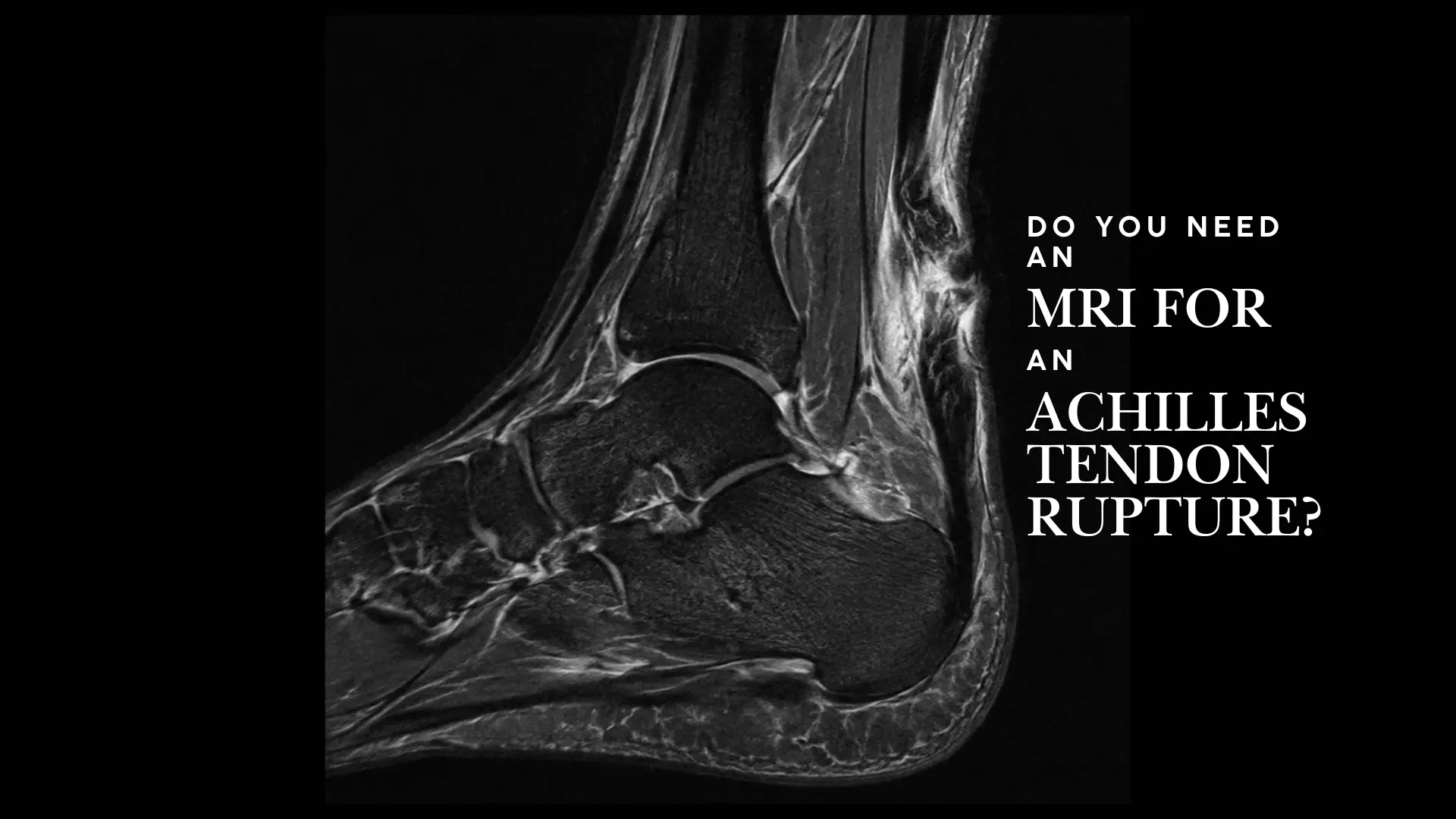
Do you need an MRI for an Achilles tendon rupture?
Not every patient does.
A clear acute rupture can often be identified from the history and physical examination. Imaging becomes more useful when:
- the diagnosis is uncertain;
- a partial tear is suspected;
- the injury is not recent;
- the location of the injury is atypical;
- there is uncertainty about tendon continuity;
- another calf or ankle injury may be responsible;
- treatment planning requires additional information.
Ultrasound
Useful for dynamic tendon assessment
Ultrasound can evaluate tendon continuity dynamically and may help assess the rupture configuration.
However, ultrasound measurements should not be interpreted in isolation. The AOFAS notes that evidence for using rupture-gap measurements alone to decide between surgery and non-operative treatment remains limited.
MRI
Detailed structural information when needed
MRI provides detailed information about tendon structure and surrounding tissues and can be helpful in selected cases, especially when the diagnosis or injury pattern is unclear.
The MRI should support the clinical decision rather than replace the examination.
06 · Treatment decisions
Does every Achilles tendon rupture need surgery?
No. Modern evidence supports both operative and non-operative treatment for appropriately selected acute Achilles ruptures.
The American Orthopaedic Foot & Ankle Society's 2024 position statement supports a balanced discussion with patients. It concludes that non-operative treatment can be effective for selected patients when combined with early functional rehabilitation, while surgical repair can also produce good outcomes in healthy and active patients.
AOFAS 2024 position statement on acute Achilles tendon rupture ↗
A large randomized trial involving more than 500 patients found no significant difference in patient-reported outcomes at 12 months between non-operative treatment, open repair and minimally invasive repair. Re-rupture occurred more often in the non-operative group in that study, while nerve injuries occurred more frequently in the surgical groups.
Read the randomized trial in the New England Journal of Medicine ↗
More recent meta-analyses similarly suggest that surgery can reduce re-rupture risk but introduces surgical risks, including wound, infection and nerve complications.
“Athletes need surgery.”
“Nobody needs surgery anymore.”
Both statements are too simplistic.
How do we decide between surgery and non-surgical treatment?
The decision may take several factors into account:
For a highly active athlete whose sport requires explosive sprinting and jumping, the discussion may be different from that for a patient whose main goal is comfortable walking and recreational activity.
Non-operative pathway
Modern non-operative care is active treatment
It generally requires a structured protocol designed to protect the tendon while healing begins, followed by progressive rehabilitation.
- functional bracing or orthosis;
- ankle positioning to protect the healing tendon;
- staged progression of weight-bearing;
- gradual restoration of ankle movement;
- progressive calf strengthening;
- balance and gait training;
- later running and plyometric progression.
Surgical pathway
Repair still requires structured rehabilitation
When surgery is selected, the torn tendon is repaired so that the tendon ends can heal in an appropriate relationship. Repair may be open or minimally invasive depending on the injury, patient and surgeon.
- ankle mobility;
- calf strength;
- tendon load capacity;
- balance and walking mechanics;
- running and jumping capacity;
- sport-specific performance.
The quality of rehabilitation is central to the result. A poorly supervised return to activity can compromise either operative or non-operative treatment.
How is Achilles tendinopathy treated?
Most Achilles tendinopathy does not start with surgery or an injection. The cornerstone is usually a progressive rehabilitation program.
The 2024 Achilles tendinopathy guideline strongly supports tendon-loading exercise as first-line treatment. Loading may include combinations of isometric, concentric, eccentric, isotonic and later plyometric work depending on the patient's stage and functional goals.
Load adjustment
The aim is usually not complete inactivity. Temporarily reduce activities that exceed the tendon's current capacity while maintaining appropriate movement and exercise.
Progressive calf strengthening
The tendon needs progressively increasing mechanical load to rebuild capacity. Progress according to symptoms, strength and function.
Running and jumping progression
When appropriate, rehabilitation progresses from basic calf loading toward faster contractions, running, hopping, jumping, acceleration, direction change and sport-specific drills.
Training-load review
A sudden increase in volume, intensity, hills, sprinting or jumping can exceed current tendon capacity. Rehabilitation should address how the problem developed, not only the painful area.
Patient question
Should you completely rest an Achilles tendon?
For most uncomplicated midportion Achilles tendinopathy, complete rest is generally not the goal. The 2024 clinical practice guideline advises patients to continue activity within tolerated limits while following an appropriate tendon-loading program.
This is different from an acute suspected rupture, where continuing to train or repeatedly testing the tendon yourself is inappropriate. If rupture is suspected, obtain an assessment first.
Do injections help Achilles tendinopathy?
Injection treatment should never replace a correct diagnosis and rehabilitation plan.
For persistent tendon symptoms, selected treatment options may sometimes be discussed after assessing the exact diagnosis, whether the pain is midportion or insertional, whether a partial tear is present, previous rehabilitation quality, imaging findings when relevant, and activity demands.
Importantly, PRP should not be presented as a routine treatment for acute Achilles rupture. The 2024 AOFAS position statement notes that current evidence has not demonstrated a definitive benefit from PRP in acute rupture management.
For chronic tendon pain, any injection discussion should remain secondary to diagnosis, load management and structured rehabilitation.
Learn how Dr. Tomislav approaches selected orthobiologic and injection treatments →
07 · Red flags
When should Achilles pain be assessed promptly?
Seek prompt medical assessment if you experience:
- a sudden pop or snap behind the ankle;
- sudden loss of push-off strength;
- difficulty standing on the injured leg's toes;
- rapidly developing swelling or bruising;
- an obvious gap or abnormal tendon contour;
- significant difficulty walking after a sudden injury.
You should also seek urgent medical attention if immobilisation or an Achilles injury is followed by symptoms concerning for a blood clot, such as marked calf swelling, or particularly chest pain or unexplained shortness of breath.
When should chronic Achilles pain be assessed?
An assessment is appropriate when Achilles pain:
- keeps returning;
- is progressively worsening;
- limits running or sport;
- causes persistent morning stiffness;
- has not improved despite appropriate rehabilitation;
- followed a sudden change in training load;
- is associated with significant weakness;
- does not fit the usual pattern of tendinopathy.
It is also reasonable to seek a second opinion if you already have ultrasound or MRI findings but are unsure what those findings mean for your treatment or return to sport.
08 · Recovery and function
When can you return to running or sport after an Achilles injury?
There is no single safe date that applies to every patient.
Time matters because tendon healing takes time, but return to sport should also consider function.
Pain response to loading
Ankle movement
Calf strength
Heel-rise capacity
Side-to-side differences
Tolerance of running
Hopping and jumping performance
Sport-specific loading
Confidence in the injured leg
Published literature continues to show that standardized return-to-sport criteria after Achilles rupture are not universally defined. This is one reason recovery should not be based only on the number of weeks since injury.
09 · Dubai assessment
Achilles tendon assessment in Dubai
For patients in Dubai with a sudden Achilles injury, persistent Achilles pain, suspected tendon tear or uncertainty about an MRI or ultrasound result, the first step is to determine the actual diagnosis.
Dr. Tomislav Cerovecki assesses tendon and sports injuries at Tadawi Specialty Hospital in Al Garhoud, Dubai, with treatment planning based on examination, imaging when needed, activity demands and the patient's goals.
The existing Tendon & Muscle Injuries service covers Achilles tendon pain and rupture alongside other sports-related tendon and muscle injuries, with a diagnosis-first approach rather than assuming that every tendon problem requires surgery or an injection.
10 · Patient questions
Achilles rupture and tendinopathy FAQ
These answers provide general education. A personal treatment recommendation requires an examination and review of the complete injury pattern.
Can an Achilles rupture be missed?
Yes. A patient may still be able to move the ankle or walk, particularly because other muscles can contribute to plantar flexion. Sudden injury combined with loss of push-off strength should therefore be assessed clinically.
Can tendinopathy cause a sudden pop?
A sudden pop is not typical of ordinary chronic tendinopathy and should raise concern for an acute tear, rupture or another sudden soft-tissue injury.
Do I need an MRI for Achilles tendinopathy?
Usually not as the first step when symptoms and examination are typical. Imaging is more useful when the diagnosis is uncertain, symptoms do not respond as expected, or another condition such as a partial tear is suspected.
Is surgery always better for Achilles rupture in athletes?
No. Surgery and non-operative treatment each have potential advantages and risks. Activity demands are important, but they are only one part of the decision. Current evidence supports individualized treatment rather than one approach for every patient.
Can Achilles tendinopathy improve without an injection?
Yes. Progressive tendon loading and rehabilitation are the main evidence-based treatments for many patients with midportion Achilles tendinopathy.
Should I stop running completely if my Achilles hurts?
Not necessarily for tendinopathy. Activity often needs to be adjusted according to symptoms and tendon capacity rather than stopped completely. However, do not continue sport if an acute rupture is suspected.
Achilles and tendon-injury assessment in Dubai
Get a plan based on the diagnosis, function and your activity goals
If you have experienced a sudden Achilles injury, persistent tendon pain, reduced push-off strength, recurring symptoms, or uncertainty about an ultrasound or MRI result, a focused orthopaedic assessment can clarify the diagnosis and the appropriate next step.
Dr. Tomislav Cerovecki
Orthopaedic Surgeon — Sports Injuries & Knee Surgery
Tadawi Specialty Hospital, Al Garhoud, Dubai
Medical references
Selected evidence used for this patient guide
- American Orthopaedic Foot & Ankle Society. Management of Acute Achilles Tendon Ruptures — Position Statement. November 2024.
- Chimenti RL, Neville C, Houck J, Cuddeford T, Carreira D, Martin RL. Achilles Pain, Stiffness, and Muscle Power Deficits: Midportion Achilles Tendinopathy Revision — 2024. J Orthop Sports Phys Ther. 2024;54(12):CPG1–CPG32.
- Myhrvold SB, et al. Nonoperative or Surgical Treatment of Acute Achilles' Tendon Rupture. N Engl J Med. 2022;386:1409–1420.
- Fan L, Hu Y, Zhou L, Fu W. Surgical vs. nonoperative treatment for acute Achilles' tendon rupture: a meta-analysis of randomized controlled trials. Front Surg. 2024.
- Operative versus nonoperative management of acute Achilles tendon rupture: systematic review and meta-analysis of randomized controlled trials. Literature searched through March 2025.