






MENISCUS TEAR SYMPTOMS IN DUBAI
Meniscus Tear: Locking vs Catching — What Changes the Plan?
A click, catch or painful “stuck” feeling can be worrying, but these symptoms do not all mean the same thing. A knee that is truly blocked and cannot fully straighten after an injury needs a different level of assessment from an occasional click with normal movement.
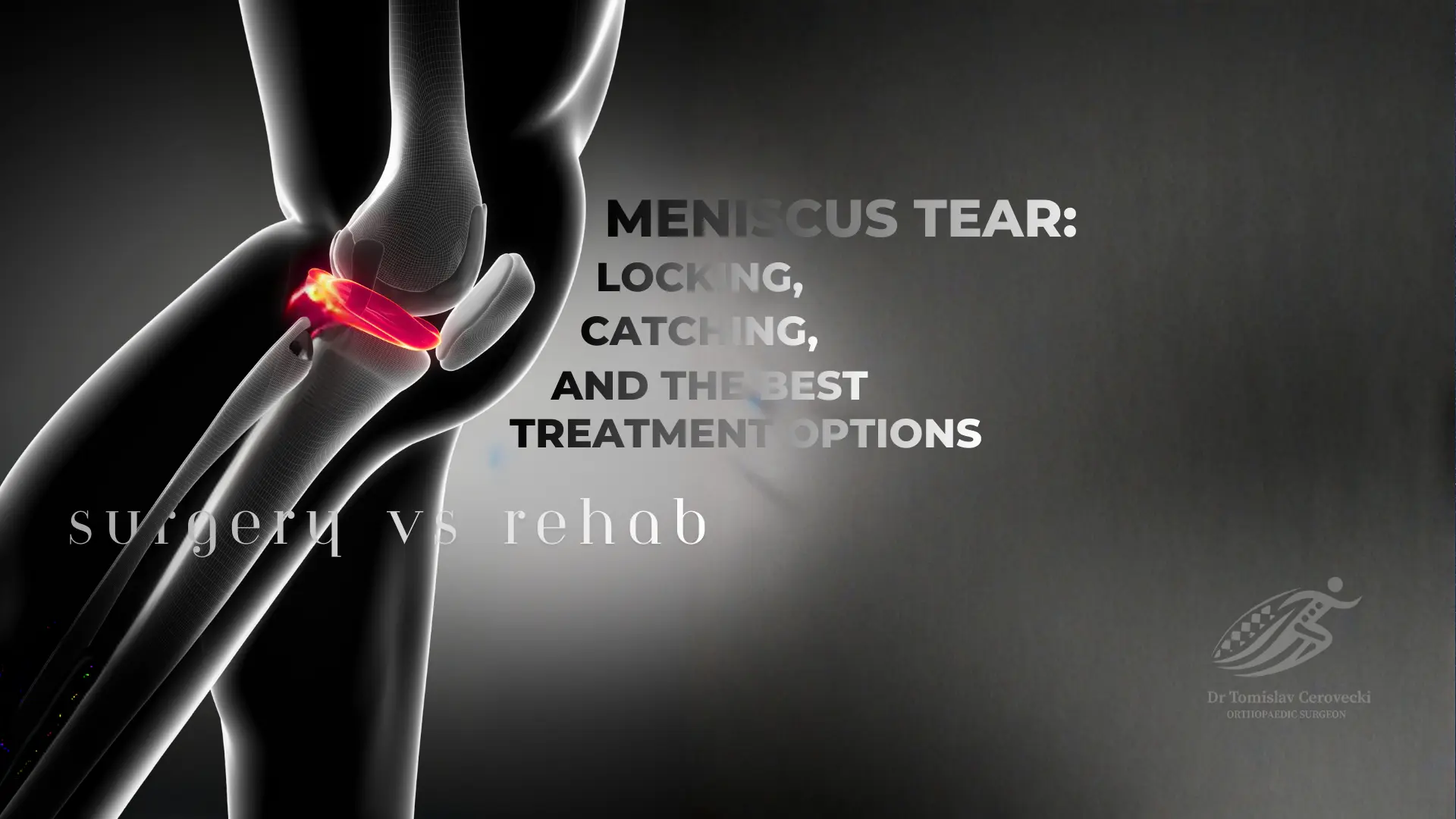
START WITH THE SYMPTOM
“Locking” is often used for different knee experiences.
Describing exactly what happens helps separate a potentially mechanical block from pain, guarding, weakness or a harmless noise. This distinction supports a more precise assessment.
True mechanical locking
The knee becomes stuck and you cannot fully straighten or bend it normally, often after a twist or acute injury. A displaced meniscal fragment is one possible cause, but not the only one.
Catching or a brief jam
Movement hesitates, pinches or briefly feels interrupted but then continues. It can occur with meniscal, cartilage, kneecap or other knee problems, so it should not be used as a diagnosis by itself.
Clicking without a block
A painless click with full motion and no swelling may not require treatment. Persistent pain, recurrent swelling or loss of confidence changes the picture.
TRUE LOCKING VS CATCHING
When a “stuck knee” needs prompt specialist review
A true locked knee is a functional problem, not only a feeling. The knee cannot return to its normal range of movement, especially full extension. After a recent twisting injury, this can occur when a displaced or displacing meniscal tear physically interferes with movement.
That does not mean every blocked knee needs emergency surgery. It does mean the knee should be examined promptly, because delaying assessment of a potentially repairable or motion-blocking tear may narrow treatment options.
WHAT MAY BE CAUSING THE SYMPTOM
A meniscus tear is common, but it is not the only explanation.
The meniscus is a load-sharing structure between the thighbone and shinbone. A tear may follow an injury or develop gradually with age and cartilage wear. Symptoms should be matched to the whole knee, not just an MRI phrase.
Traumatic meniscal tear
A pivot, twist or deep loaded movement can create a tear that becomes painful, swollen or mechanically symptomatic.
Degenerative meniscal change
Meniscal changes can be present on MRI as part of knee ageing. They may or may not be the main source of symptoms.
Cartilage or loose-body problem
Cartilage injury or a loose fragment inside the joint can also cause catching, swelling or a motion block.
Another knee condition
Kneecap disorders, ligament injury, arthritis or pain-related muscle guarding can mimic mechanical symptoms.
HOW A MENISCUS TEAR IS ASSESSED
The MRI matters — but it is not the whole diagnosis.
A careful plan connects the injury story, movement loss, joint-line symptoms, swelling, examination findings and imaging. This avoids treating an image rather than treating the patient.
- 1
History
How symptoms began, what provokes them, prior injuries and the impact on daily activity, work or sport.
- 2
Physical examination
Range of motion, joint-line tenderness, swelling, meniscal tests, stability and movement quality.
- 3
Imaging when useful
X-ray may be needed after trauma or when bone and arthritis are relevant. MRI is useful for internal structures and tear pattern when it will guide the plan.
- 4
Personalised decision
Options depend on tear pattern, displacement, repair potential, cartilage health, age, activity demands and response to rehabilitation.
TREATMENT DECISION-MAKING
Rehabilitation, repair or partial meniscectomy?
No single option is right for every tear. The goal is to restore function while preserving as much healthy meniscal tissue as possible when surgery is indicated.
Rehabilitation-first care
Often appropriate when movement is not blocked, symptoms are stable or improving, and the tear is not clearly displaced or repairable after an acute injury.
- Activity and swelling management
- Restore motion and strength
- Gradual return to sport or work
Early surgical discussion
May be appropriate for an acute displaced or displacing tear that limits movement, or a symptomatic tear with meaningful repair potential.
- Assess repair potential early
- Protect long-term meniscal function
- Plan procedure-specific rehabilitation
Selective partial meniscectomy
May be considered when an unstable symptomatic portion cannot be repaired or preserved. The objective is to remove as little functional tissue as necessary.
- Not a default response to every tear
- Depends on tissue quality and pattern
- Needs individual recovery planning
A tear described as “complex,” “degenerative” or “bucket-handle” on MRI should not be interpreted in isolation. The clinical examination and actual loss of function still matter.
WHEN TO SEEK HELP
Symptoms that should not be ignored
These features do not diagnose a meniscus tear by themselves, but they justify a timely medical review to rule out a significant knee injury or another cause of a motion block.
FREQUENTLY ASKED QUESTIONS
Meniscus locking and catching FAQs
These general answers cannot replace an individual examination, especially after a new injury or true loss of knee movement.
Does catching mean I need meniscus surgery?
No. Catching is a symptom, not a diagnosis. It should be assessed with your examination, swelling, movement, injury history, imaging when needed and treatment goals.
What is the difference between true locking and clicking?
True locking means the knee cannot complete normal movement, often especially full extension. Clicking is a sound or sensation and may occur without any mechanical block.
Can a meniscus tear cause a knee to lock?
Yes. A displaced or displacing meniscal tear can restrict movement, but cartilage injury, loose bodies and other knee conditions can also create similar symptoms.
Is MRI always needed for knee locking or catching?
Not always. Examination is essential. MRI is commonly used when an internal knee injury is suspected and imaging will help confirm the diagnosis or guide treatment planning.
Can a meniscus tear improve without surgery?
Many tears can be managed without surgery, especially when the knee is not truly locked and symptoms improve with rehabilitation, strength work and sensible activity modification.
Is meniscus repair better than trimming?
When a tear can be repaired, preserving the meniscus is generally preferred. Some tears are not repairable, so the right procedure depends on the tear pattern, tissue quality and the wider knee condition.
NEXT STEP
Need a clear plan for locking, catching or a possible meniscus tear?
A focused orthopaedic assessment can help clarify whether your knee needs rehabilitation, imaging review, monitoring or a surgical discussion based on the actual pattern of symptoms and movement loss.