




MENISCUS SURGERY IN DUBAI
Meniscus Surgery: Repair, Meniscectomy & Recovery
A meniscus tear on MRI does not automatically mean surgery. The right plan depends on your symptoms, examination, tear pattern, cartilage health, activity goals and whether preserving the meniscus is possible.
- Not every meniscus tear needs an operation
- Repair is preferred when the tissue can be preserved
- True locking, a displaced tear or a repairable acute tear may need earlier assessment
THE ESSENTIAL ANSWER
The aim is not simply to remove a tear. It is to protect the knee.
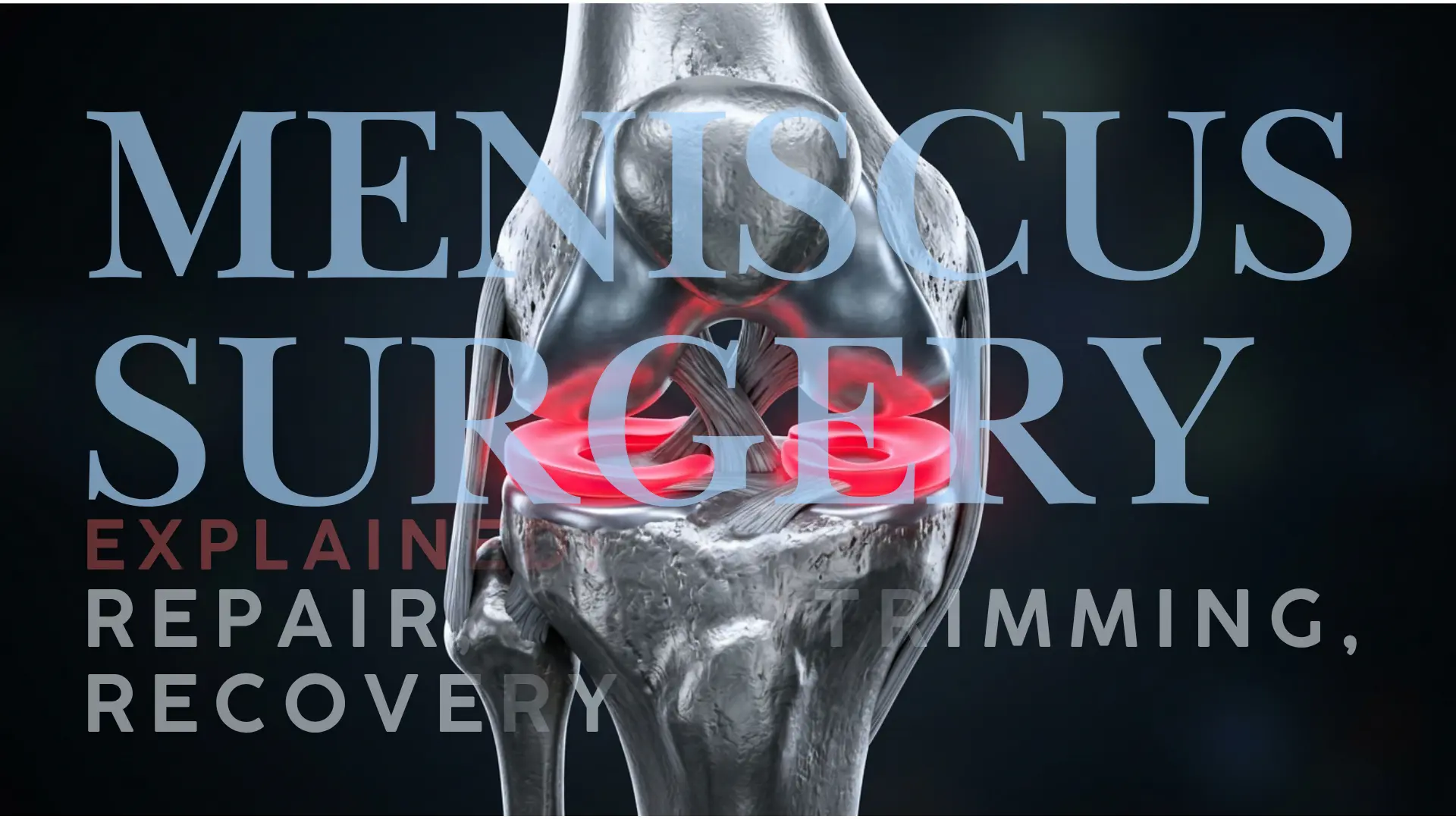
The meniscus distributes load, helps joint stability and protects cartilage. Treatment is therefore individual: a stable or degenerative tear may be managed with rehabilitation, while a displaced, symptomatic or potentially repairable traumatic tear may require a surgical discussion.
Symptoms first
Pain alone is not enough. Swelling, loss of movement, true locking, instability and functional limits matter.
Examination + imaging
MRI helps define the tear, but the examination explains how the knee is functioning in real life.
Preserve when possible
When a tear is suitable for repair, preserving meniscal tissue is usually the preferred strategy.
UNDERSTANDING THE INJURY
What does the meniscus do?
Each knee has two menisci: the medial meniscus on the inner side and the lateral meniscus on the outer side. They are not simple “spacers.” They help distribute load, absorb shock, contribute to stability and support the joint surface during movement.
A tear may happen after a twist, pivot, squat or impact. It may also develop gradually as the tissue changes with age and cartilage wear. These two situations often require a different conversation about treatment.
NOT EVERY TEAR NEEDS SURGERY
When non-surgical treatment may be reasonable
Many people improve without an operation, particularly when the tear is not blocking movement and the main problem is pain, swelling, weakness or reduced tolerance for activity. The plan may include targeted rehabilitation, swelling control, temporary activity modification and review of the broader knee condition.
Stable symptoms
The knee can fully move, there is no true mechanical block and symptoms are manageable with a structured plan.
Degenerative pattern
The tear developed gradually or appears alongside cartilage wear, rather than following a significant acute injury.
Function is improving
Strength, movement, swelling and confidence are improving with rehabilitation and sensible load progression.
WHEN SURGERY MAY ENTER THE DISCUSSION
When a meniscus tear may need earlier surgical assessment
Surgery is not selected because a scan merely shows a tear. It becomes more relevant when symptoms, examination and tear characteristics suggest that continuing without treatment may leave a mechanical problem unresolved or reduce the chance to preserve repairable tissue.
True locking or blocked motion
A knee that repeatedly gets stuck or cannot fully straighten needs prompt assessment, especially after an acute injury.
Acute traumatic tear that may be repairable
Fresh tears after a meaningful injury may be candidates for repair when the pattern, location and tissue quality allow it.
Persistent functional limitation
Ongoing swelling, pain or activity restriction despite an appropriate rehabilitation programme may justify reassessment.
TREATMENT OPTIONS
Meniscus repair vs partial meniscectomy
The correct option depends on the tear pattern, location, tissue quality, stability, age of the injury, cartilage condition and your goals. The final decision may sometimes be confirmed only when the surgeon can directly inspect the meniscus at arthroscopy.
There is no universal “best” procedure. A repair is not automatically possible, and trimming is not automatically wrong. The objective is a stable knee with the maximum appropriate meniscal preservation.
VIDEO GUIDE
Meniscus Surgery Explained: Repair vs Trimming, Recovery & When You Really Need It
This patient-focused video explains the difference between meniscus repair and partial meniscectomy, why not every tear needs surgery, and why recovery must be based on the specific tear, procedure and function of the knee.
Understand the treatment decision before focusing on the MRI wording alone.
A meniscus tear can mean different things for different patients. The decision depends on symptoms, true locking, tear pattern, tissue quality, cartilage condition, stability, activity demands and whether the meniscus can realistically be preserved.
-
01
When surgery may be needed
Mechanical locking, displaced tears, repairable acute injuries or persistent functional limitations may require earlier review.
-
02
Repair versus trimming
Repair is preferred when healing and preservation are realistic; partial meniscectomy is used selectively when preservation is not feasible.
-
03
Recovery is not one fixed timeline
Return to normal activity, work or sport depends on swelling, movement, strength, confidence and procedure-specific rehabilitation.
This video is for patient education. The appropriate treatment depends on your own symptoms, knee examination, MRI findings and activity goals.
RECOVERY & RETURN TO ACTIVITY
What recovery after meniscus surgery usually involves
Recovery is not a calendar date. It is a progression based on swelling, wound healing, movement, strength, walking pattern, balance, confidence and the demands of your job or sport.
Protect the knee
Early priorities are swelling control, pain management, safe movement and following procedure-specific restrictions.
Restore movement and strength
Rehabilitation progressively targets range of motion, quadriceps control, hip strength and normal walking mechanics.
Build function
Squatting, stairs, balance, running, cutting and landing are progressed only when the knee is ready for the next load.
Return with criteria
Return to sport or demanding work should reflect function and readiness, not only the number of weeks since surgery.
HOW THE PLAN IS DECIDED
What is assessed before recommending treatment?
A careful recommendation connects the injury story to the examination and imaging. This helps avoid treating an MRI phrase rather than treating the patient.
FREQUENTLY ASKED QUESTIONS
Meniscus surgery FAQs
Short answers to the questions patients ask most often. Your own diagnosis and treatment plan may be different.
Do all meniscus tears need surgery?
No. Many tears can be managed without surgery, particularly when there is no true locking, movement is preserved and symptoms improve with rehabilitation.
When might a meniscus tear need surgery?
Surgery may be considered for a displaced tear that blocks movement, a repairable acute traumatic tear, or persistent symptoms and functional limitation despite appropriate non-surgical care.
Is meniscus repair better than trimming?
When a tear is repairable, preserving the meniscus is generally preferred. However, some tears are not suitable for repair, so the choice must be individual.
Is recovery faster after partial meniscectomy or meniscus repair?
Early recovery is often faster after partial meniscectomy. Repair typically needs a more protected rehabilitation period because the repaired tissue needs time to heal.
Can an MRI alone decide whether I need surgery?
No. MRI is valuable for defining internal knee structures, but treatment should also reflect symptoms, examination findings, activity goals and the health of the rest of the knee.
Can I return to sport after meniscus surgery?
Many patients do return to sport, but timing depends on the operation, swelling, movement, strength, movement quality, confidence and the physical demands of the sport.
NEXT STEP
Need a clear plan for knee pain or a meniscus tear?
A focused orthopaedic consultation can help you understand your symptoms, MRI report and the appropriate next step — rehabilitation, monitoring, further imaging or surgical planning when indicated.